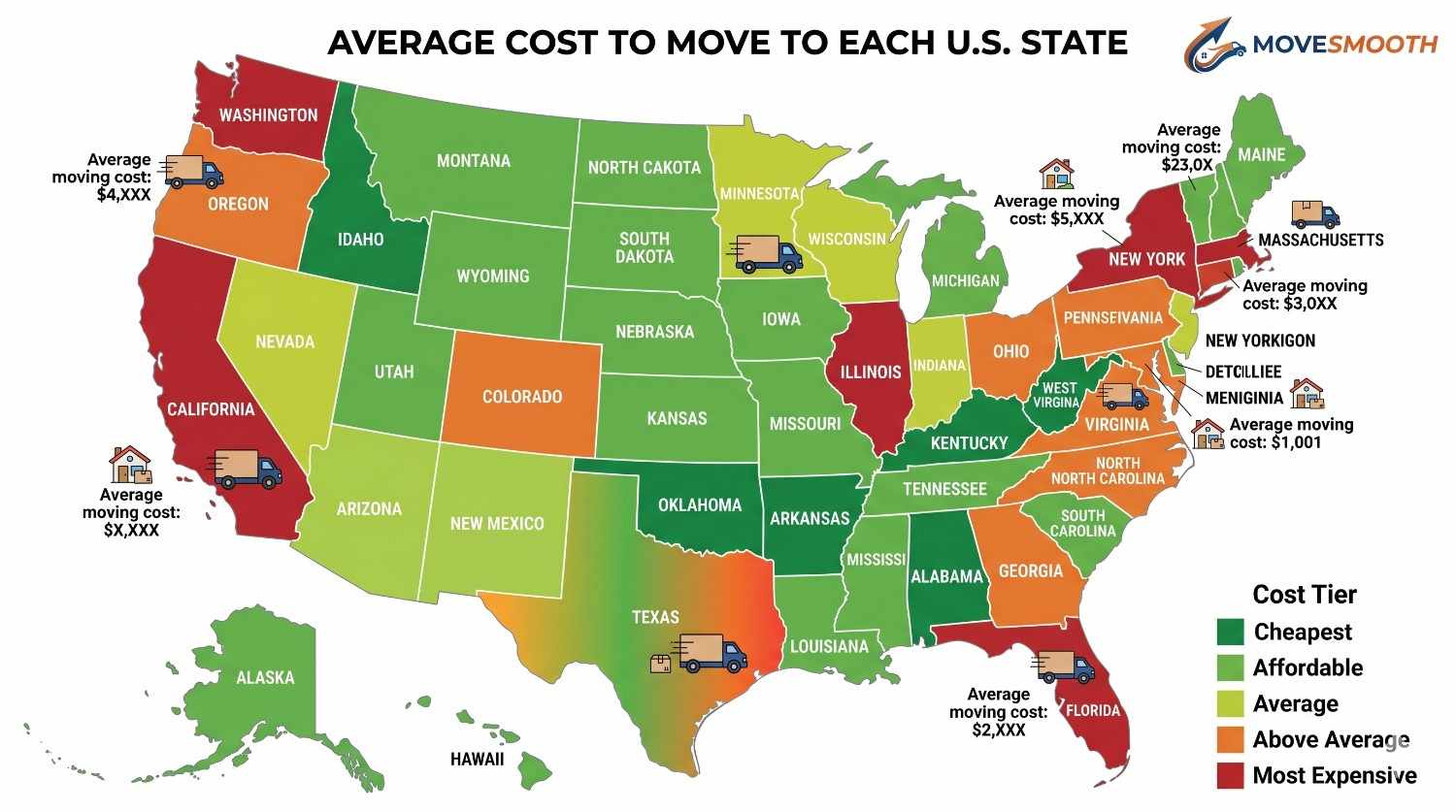
Moving to a new home is exciting — but the cost of moving in 2026 can catch you off guard if you're not prepared. Whether you're relocating across town or moving cross-country, understanding the average moving cost ahead of time helps you budget wisely and avoid last-minute surprises.
In this comprehensive guide, we'll break down exactly how much it costs to hire movers in 2026, explain the hidden fees most people miss, and share proven strategies to save hundreds (or even thousands) on your next move.
Average Cost of a Local Move in 2026
A local move is typically defined as any move within the same city or within a 50-mile radius. For most households, the average cost ranges from $800 to $2,500 depending on several key factors.
Factors That Affect Local Moving Costs
- Size of your home: A studio or 1-bedroom apartment costs significantly less than a 4-bedroom house. More rooms mean more stuff, more boxes, and more labor hours.
- Number of movers: Most local jobs require 2–4 movers. Companies charge per mover, per hour — typically $25–$50 per mover per hour.
- Time of year: Summer (June–August) is peak moving season. Expect rates to be 20–30% higher than winter months.
- Day of the week: Weekday moves are almost always cheaper than weekend moves.
- Distance: Even within a city, a move across town takes longer than moving a few blocks away.
💡 Pro Tip: If your schedule is flexible, booking a mid-week move during the fall or winter can save you up to 30% on labor costs alone.
If you're looking for trusted local movers in your state, check out our directory of best local moving companies to compare ratings and request free quotes.
Average Cost of a Long-Distance Move in 2026
A long-distance move — sometimes called an interstate or cross-country move — covers distances greater than 50 miles, often across state lines. The average cost in 2026 ranges from $2,000 to $8,000, with coast-to-coast moves exceeding $10,000 for larger households.
What Drives Long-Distance Moving Costs?
- Total weight of shipment: Long-distance movers charge primarily by weight. The average 2-bedroom home weighs around 5,000 lbs.
- Distance traveled: A 500-mile move costs significantly less than a 2,500-mile cross-country relocation.
- Additional services: Packing, unpacking, furniture disassembly/assembly, and specialty items (pianos, antiques) add to the total.
- Insurance and valuation coverage: Basic coverage is included, but full-value protection costs extra (typically 1% of declared item value).
Planning a long-distance move? Compare top long-distance moving companies to find the best value for your specific route.

Complete Moving Cost Breakdown Table
Here's a detailed breakdown of what you'll pay for each component of a typical move in 2026:
| Cost Category | Local Move | Long-Distance Move |
|---|---|---|
| Labor (movers) | $400 – $1,200 | Included in total weight-based quote |
| Truck / Transportation | $150 – $500 | $1,000 – $4,500 |
| Packing Materials | $50 – $200 | $150 – $500 |
| Professional Packing Service | $200 – $600 | $500 – $2,000 |
| Insurance / Valuation | $50 – $100 | $100 – $500 |
| Storage (if needed) | $75 – $300/month | $100 – $500/month |
| Specialty Items (piano, art, etc.) | $100 – $500 | $200 – $1,000 |
| Total Estimated Range | $800 – $2,500 | $2,000 – $8,000+ |
Hidden Moving Costs Most People Miss
The quote you receive from a moving company is rarely the final number. Here are the most common hidden costs that catch homeowners off guard:
1. Stair and Elevator Fees
If your apartment is above the ground floor and doesn't have elevator access, most movers charge an additional $50–$75 per flight of stairs. Even with elevators, some companies charge a flat elevator fee of $75–$150 because it slows down the loading process.
2. Long Carry Charges
If the moving truck can't park within 75 feet of your front door (common in apartments and downtown areas), movers add a "long carry" surcharge of $100–$200. This covers the extra time and effort of carrying items a longer distance.
3. Bulky or Oversized Items
Items like pool tables, hot tubs, safes, and grand pianos require special handling and equipment. Expect to pay $150–$500 extra per item depending on size and complexity.
4. Last-Minute Schedule Changes
Need to reschedule your move within 48 hours of the original date? Most companies charge a rescheduling fee of $100–$300. Cancellations within 24 hours may forfeit your deposit entirely.
5. Tipping Your Movers
While not mandatory, tipping is customary and expected. The general guideline is $5–$10 per mover per hour for local moves, or 15–20% of the total bill for long-distance moves. For a 4-hour local move with 3 movers, that's $60–$120 in tips alone.
- Stair carry fees
- Long carry or shuttle service charges
- Fuel surcharges
- Packing material costs (tape, blankets, stretch wrap)
- Weekend or holiday surcharges
- Storage-in-transit fees
- Disassembly / reassembly charges
- Cancellation or rescheduling penalties
How to Save Money on Your Move
Moving doesn't have to drain your savings. Here are battle-tested strategies to reduce your moving cost in 2026:
1. Declutter Before You Pack
Every pound you move costs money — especially on long-distance moves. Sell, donate, or discard items you no longer need. Hosting a garage sale or listing items on Facebook Marketplace can even put cash back in your pocket.
2. Get Multiple Quotes
Never hire the first mover you find. Get at least 3–5 quotes from different companies and compare them carefully. Make sure each quote includes the same services so you're comparing apples to apples. You can use our free Moving Cost Calculator to get instant estimates.
3. Move During Off-Peak Times
Avoid summer weekends at all costs. The cheapest time to move is mid-month, mid-week, during fall or winter. You'll get better rates AND better availability.
4. Pack Yourself
Professional packing is convenient but expensive. If you have the time, packing your own boxes can save $200–$2,000 depending on the size of your home. Use free boxes from grocery stores and liquor shops to save even more on materials.
5. Ask About Discounts
Many moving companies offer discounts for military personnel, seniors, students, and AAA members. Always ask — you might be surprised what's available.

DIY Move vs. Hiring Professional Movers: Cost Comparison
One of the biggest decisions you'll face is whether to handle the move yourself or hire professionals. Here's how the costs compare for a typical 2-bedroom apartment move:
| Expense | DIY Move | Professional Movers |
|---|---|---|
| Truck Rental | $100 – $300 | Included |
| Fuel | $50 – $200 | Included |
| Packing Supplies | $50 – $150 | $100 – $300 (or included) |
| Equipment (dolly, straps) | $30 – $60 | Included |
| Labor (friends/family) | Pizza & drinks (~$50) | $400 – $1,200 |
| Insurance | $0 (your risk) | $50 – $200 |
| Total Estimated Cost | $280 – $760 | $800 – $2,500 |
The Verdict: A DIY move saves money, but it costs you time, energy, and comes with the risk of injury or property damage. If your belongings are valuable or the move is complex, hiring professional movers is almost always worth the investment.
Looking for affordable movers in your area? Browse our state directories to find vetted and reviewed companies near you:
- Best Moving Companies in California
- Best Moving Companies in Texas
- Best Moving Companies in New York
- Best Moving Companies in Florida
Final Thoughts
The average moving cost in 2026 ranges from $800 to $2,500 for local moves and $2,000 to $8,000+ for long-distance moves. The actual price depends on your home size, distance, timing, and the services you choose.
The smartest thing you can do is plan ahead, get multiple quotes, and ask the right questions before signing any contract. Remember: the cheapest quote isn't always the best — look for a balance of price, reviews, and proper licensing.
Ready to Find Out Your Exact Moving Cost?
Compare free quotes from top-rated moving companies in your area. It takes less than 2 minutes, and there's zero obligation.
Get Free Moving Quotes →